
Purpose:
Part 1 tests your basic and applied sciences knowledge relevant to Obstetrics & Gynaecology. It ensures you understand the scientific foundations that underpin clinical practice.
🧾 Exam Format (Structure)
| Component | Details |
|---|---|
| Exam Type | Computer-based (CBT) |
| Duration | 2 papers (each 2.5 hours) on the same day |
| Total Questions | 200 SBAs (Single Best Answers) |
| Question Style | Each SBA has 5 options (A–E), only one best answer |
| Marking | 1 mark per question; no negative marking |
| Location | Pearson VUE test centres (worldwide) |
📘 Paper Breakdown
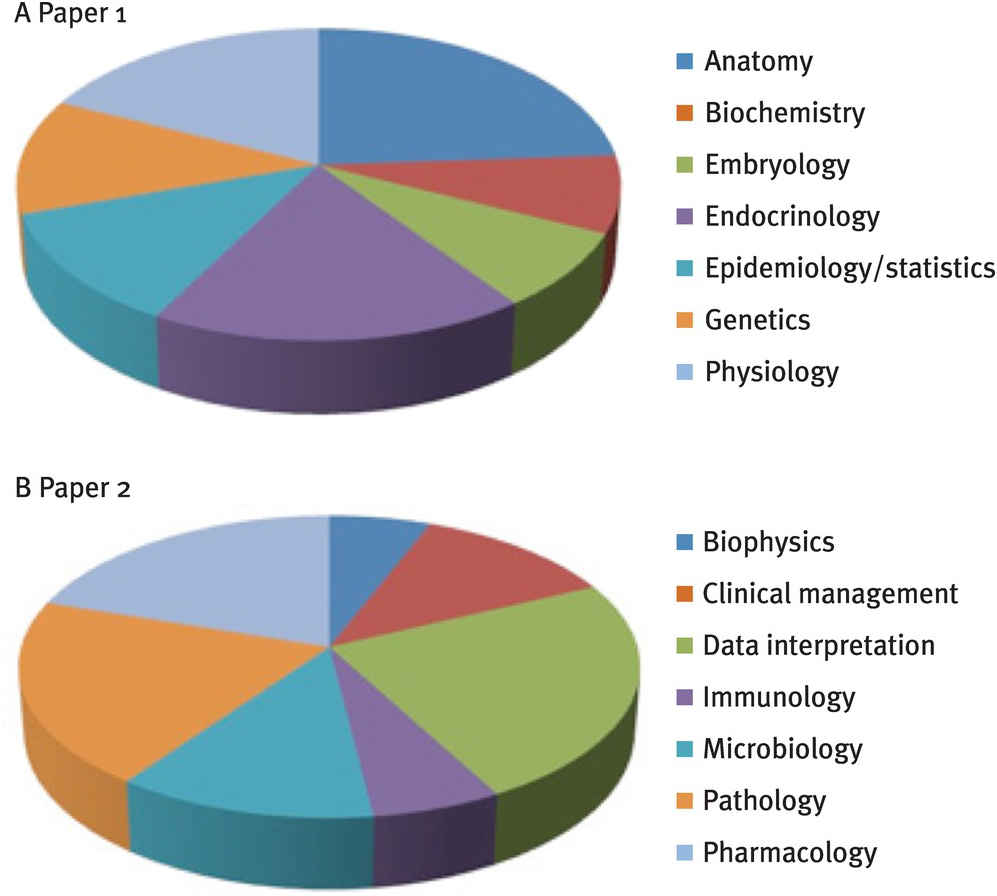
Paper 1 – Basic Sciences (100 Questions)
Covers the fundamentals related to O&G:
Anatomy (Pelvic, Reproductive, Surgical)
Physiology (Reproductive, Endocrine, Cardiovascular, Renal, etc.)
Biochemistry
Biophysics
Embryology
Genetics
Biostatistics & Epidemiology (basic level)
Pharmacology (relevant to pregnancy)
Pathology (principles)
Paper 2 – Applied Basic Sciences (100 Questions)
Applies scientific knowledge to clinical O&G:
Reproductive endocrinology & physiology of pregnancy
Fertilization, implantation, early development
Fetal physiology & growth
Labour mechanisms
Placental function
Pathophysiology of obstetric & gynaecological disorders
Pharmacological agents used in O&G
Anatomy related to surgical procedures
Screening, statistics & interpretation of data
📚 Core Areas Covered
| Domain | Examples |
|---|---|
| Anatomy | Pelvic floor, blood supply, ureteric relations |
| Physiology | Menstrual cycle, hormones, pregnancy changes |
| Pathology | Inflammation, neoplasia, reproductive cancers |
| Pharmacology | Oxytocin, prostaglandins, antibiotics in pregnancy |
| Genetics | Chromosomal abnormalities, inheritance patterns |
| Embryology | Development of genital tract, implantation |
| Biostatistics | Sensitivity, specificity, p-values |
| Evidence-based medicine | Study designs, bias, clinical trials |
 💡 Passing Standard
The pass mark is set using the Angoff method (based on expected performance of a borderline candidate).
Each paper is marked separately, but both must be passed in the same sitting to clear Part 1.
🧩 Recommended Reading
RCOG MRCOG Part 1 Syllabus (latest version)
Books:
MRCOG Part 1: Your Essential Revision Guide – Dr. Alison Fiander
One for All MRCOG Part 1 – Alison Fiander
Get Through MRCOG Part 1: MCQs and EMQs
Web resources:
🎯 Tips for Preparation
Focus on conceptual understanding, not just memorization.
Use question banks (like MedisPrep, PassMRCOG, or RCOG Learning).
Revise reproductive physiology and anatomy in detail — highly tested.
Practice timed mock SBAs regularly.
Keep revisiting statistics — often underestimated but high-yield.

📍Week 1 – Anatomy & Embryology
Focus: Female pelvis, perineum, urogenital tract, embryological development
Topics
Pelvic bones, muscles, vessels, nerves
Uterine and ovarian anatomy
Ureteric course and injuries
Development of reproductive tract, genitalia, placenta
Congenital anomalies (e.g. Müllerian defects)
Resources:
Netter’s Atlas (selected plates), MRCOG Part 1: Essential Revision Guide Ch 1–2
MedisPrep Anatomy Flashcards
GTG No. 37a illustrations for venous pathways
Tasks:
50 SBA practice / day
Label pelvic diagrams
Mini-test Sunday
📍Week 2 – Physiology & Reproductive Endocrinology
Focus: Menstrual cycle, hypothalamo–pituitary–ovarian axis, pregnancy physiology
Topics
Hormone regulation and feedback loops
Puberty, menopause
Fertilisation, implantation
Maternal cardiovascular, renal, respiratory adaptations
Fetal growth & amniotic fluid
Resources:
Guyton & Hall summaries (selected chapters)
RCOG syllabus → Section 2 “Reproductive Physiology”
MedisPrep mock set 2
📍Week 3 – Biochemistry & Cell Biology
Focus: Cellular metabolism and molecular genetics
Topics
Cell structure, cell cycle
Protein synthesis, enzymes, hormones
Maternal–fetal metabolism (glucose, lipids)
Vitamins & trace elements
DNA replication, chromosomal abnormalities
Resources:
Lippincott’s Illustrated Biochemistry quick review
GTG 68 – Genetic Screening (for clinical links)
📍Week 4 – Pathology & Microbiology
Focus: Mechanisms of disease
Topics
Inflammation, necrosis, neoplasia
Gynae cancers (cell types & spread)
Immunology of pregnancy
Microbiology of genital tract infections (BV, chlamydia, GBS)
TORCH infections
Resources:
Robbins Basic Pathology concise notes
GTG No. 64 b (Management of sepsis)
MedisPrep SBA Pathology module
📍Week 5 – Pharmacology & Therapeutics
Focus: Drug action and safety in pregnancy
Topics
Pharmacokinetics & dynamics
Teratogenic drugs (ACE inhibitors, warfarin, etc.)
Tocolytics, uterotonics, antihypertensives, antibiotics
Drug transfer across placenta & breastfeeding safety
Resources:
Rang & Dale Pharmacology review
BNF + GTG 37b (anticoagulation in pregnancy)
Tasks:
Drug tables & contraindications flashcards
60 SBAs (Pharmacology only)
📍Week 6 – Biostatistics, Evidence & Integration
Focus: Data interpretation + full syllabus revision
Topics
Sensitivity, specificity, predictive values
Confidence intervals, p-values, study design
Screening principles (RCOG GTG 8 & 13)
Integrate physiology + pathology through clinical SBAs
Resources:
Medical Statistics Made Easy
RCOG “Applied Basic Sciences” syllabus checklist
Final Week Tasks:
3 Full-length timed mocks (200 Q each)
Review wrong answers
Focus on weak domains
🧩 Weekly Routine Template
| Day | Focus | Tasks |
|---|---|---|
| Mon–Fri | Study 2 topics/day | 2 × 1-h reading blocks + 50 SBAs |
| Sat | Mock test (100 Qs) | Review explanations |
| Sun | Concept revision | Summarise notes + rest half-day |
📚 Essential Resources
RCOG official syllabus: “MRCOG Part 1 Curriculum 2024”
Books:
MRCOG Part 1: Your Essential Revision Guide
One for All MRCOG Part 1
Get Through MRCOG Part 1 (for SBAs)
Online:
MedisPrep Question Bank (topic-wise timed quizzes)